
Help Me See Jesus: A Prayer for Revelation, Hope, Identity, and Power
We live in the most information-rich world in history.
We have podcasts, YouTube, Bible apps, online commentaries, courses, books, sermons, and endless access to data. Some of it is helpful. Some of it is not. But one thing is clear: we are surrounded by more information than ever before.
And yet, information alone has not produced mature disciples.
If information was enough to transform people, we would be the strongest, most missional, most hope-filled generation the Church has ever seen. But many people still struggle with identity, hope, powerlessness, fear, addiction, anger, anxiety, sickness, pressure, and sorrow for loved ones who need Jesus.
Why?
Because information cannot revive a heart.
Information cannot reform character.
Information cannot renew a nation.
The apostle Paul understood that we need something deeper than information. We need revelation.
In Ephesians 1, Paul writes from a Roman prison cell. And what he prays is surprising. He does not primarily pray for escape. He does not pray for easier circumstances. He does not pray that the church would simply receive better teaching or more information.
He prays that they would receive the Spirit of wisdom and revelation so they may know Jesus better.
Our greatest need is not a change of circumstances.
Our greatest need is not more biblical facts.
Our greatest need is a divine encounter with Jesus.
Paul prays, “I keep asking.”
That phrase matters. Prayer requires endurance. It is easy to keep thanking God when answers are coming quickly, but we are also called to keep thanking Him while we wait. We keep asking. We keep seeking. We keep knocking. We keep praying.
Persistence is a key part of prayer.
Then Paul prays that the God of our Lord Jesus Christ, the glorious Father, would give the church the Spirit of wisdom and revelation.
Wisdom is not just human intelligence. It is the God-given ability to see reality from God’s perspective and live accordingly.
Revelation is an unveiling. It is seeing what has always been there, but suddenly seeing it clearly.
Like putting on glasses for the first time, revelation brings clarity. It is not about discovering strange new doctrines. It is the Holy Spirit illuminating the beauty, truth, majesty, glory, and power of Jesus.
This is where Western Christianity often gets it wrong. We can assume discipleship is mainly the accumulation of biblical information. If we know enough facts, attend enough classes, and read enough books, we think we will automatically become more like Jesus.
But the Pharisees knew the Scriptures deeply and still missed Jesus when He stood in front of them.
Scripture was never meant to become an end in itself. Scripture reveals Jesus by the power of the Holy Spirit to the human heart.
Christianity is not first informational. It is relational.
Knowing about Jesus is not the same as knowing Jesus.
A person can know facts about the Rocky Mountains without ever walking through them. A person can know someone’s birthday, favourite food, hometown, and biography without truly knowing them. In the same way, we can know facts about Jesus without growing in deep, transforming relationship with Him.
Paul prays that we would truly know Him.
Then he prays that the eyes of our hearts would be enlightened.
That phrase is beautiful: your heart has eyes.
In Scripture, the heart is not just the place of feelings. It is the core of a person — the place of thought, desire, trust, worship, affection, and love. It is the control centre of the life.
That is why Proverbs tells us to guard our hearts, because everything flows from it.
Whatever has your heart has your life.
If fear has your heart, fear leads your life.
If insecurity has your heart, insecurity leads your life.
If money has your heart, money leads your life.
If comfort has your heart, comfort leads your life.
Spiritual formation is not only a battle for information. It is a battle for affection.
The Christian life is not primarily sustained by duty. It is sustained by love.
We become what we behold.
Second Corinthians 3:18 says that as we behold the Lord’s glory, we are transformed into His image. First we behold, then we become. The more clearly we see Jesus, the more He transforms us.
That means the question is not only, “What do I know?”
The question is, “What has my heart?”
Every heart has competing loves. Comfort, security, control, approval, success, money, and recognition all fight for our affection. But we do not defeat lesser loves simply by trying harder not to love them. We need a greater love to displace them.
We need to see Jesus again.
When Jesus becomes more beautiful, more real, and more central, lesser loves begin to lose their grip.
Paul prays that the eyes of our hearts would be enlightened so that hope, identity, and power would come into focus in Christ.
First, in Christ, we see the hope of our calling.
Biblical hope is not wishful thinking. It is not uncertainty. It is a confident expectation built on the unchanging promise of God.
Because Jesus died, rose again, and is returning, our future is secure.
Hope does not grow because we think positively. Hope grows as Jesus becomes clearer in our vision. The clearer we see Jesus, the less controlled we become by fear.
Second, in Christ, we discover our true identity.
Paul prays that we would know the riches of God’s glorious inheritance in His holy people. This means we are not only receiving an inheritance from God — we are His inheritance.
That changes everything.
Many people spend their lives asking, “Who am I? Do I matter? Am I enough?” But our identity is not found by searching deeper inside ourselves. It is found by looking to the cross.
The value of something is determined by what someone is willing to pay for it.
Jesus went to the cross for you.
You are more than your sin.
You are more than your confusion.
You are more than your failure.
You are more than your background.
You were bought with a price.
You belong to Jesus.
Your identity no longer rests on your performance. It rests securely in the fact that you belong to Him.
Third, in Christ, we discover His power.
Paul prays that we would know God’s incomparably great power for those who believe. Then he points to the greatest demonstration of that power: the resurrection and exaltation of Jesus.
The same power that raised Christ from the dead is available to those who believe.
Christianity is not self-improvement. It is participation in Jesus and His resurrection power.
His power helps us forgive when we want to become bitter.
His power helps us endure suffering with hope.
His power helps us resist temptation.
His power helps us love our enemies.
His power helps us overcome what we could never overcome by ourselves.
The miracle of Christianity is not that ordinary people try harder. It is that Jesus transforms ordinary people into what they could never become on their own.
Paul does not tell us to hunt for hope, search for identity, or strive for power. He tells us to see Jesus.
See Jesus, and hope becomes certain.
See Jesus, and identity becomes secure.
See Jesus, and resurrection power becomes real.
So why do so many of us live strained and drained?
Maybe because we let the world illuminate our eyes before we let the Spirit enlighten the eyes of our hearts. We check our phones, our worries, our struggles, and our circumstances before we behold Jesus.
This week, before opening a screen, before opening your mind to worry, before trying to solve every problem, pray these four words:
Help me see Jesus.
Before you pray, “Lord, solve my financial problems,” pray, “Help me see Jesus.”
Before you pray, “Lord, change my boss, my spouse, my children, or my parents,” pray, “Help me see Jesus.”
Before you face the struggle, pray, “Help me see Jesus.”
Before you walk into the unknown, pray, “Help me see Jesus.”
Lord, give us the Spirit of wisdom and revelation. Open the eyes of our hearts. Help us know You better.
Help us see Jesus.
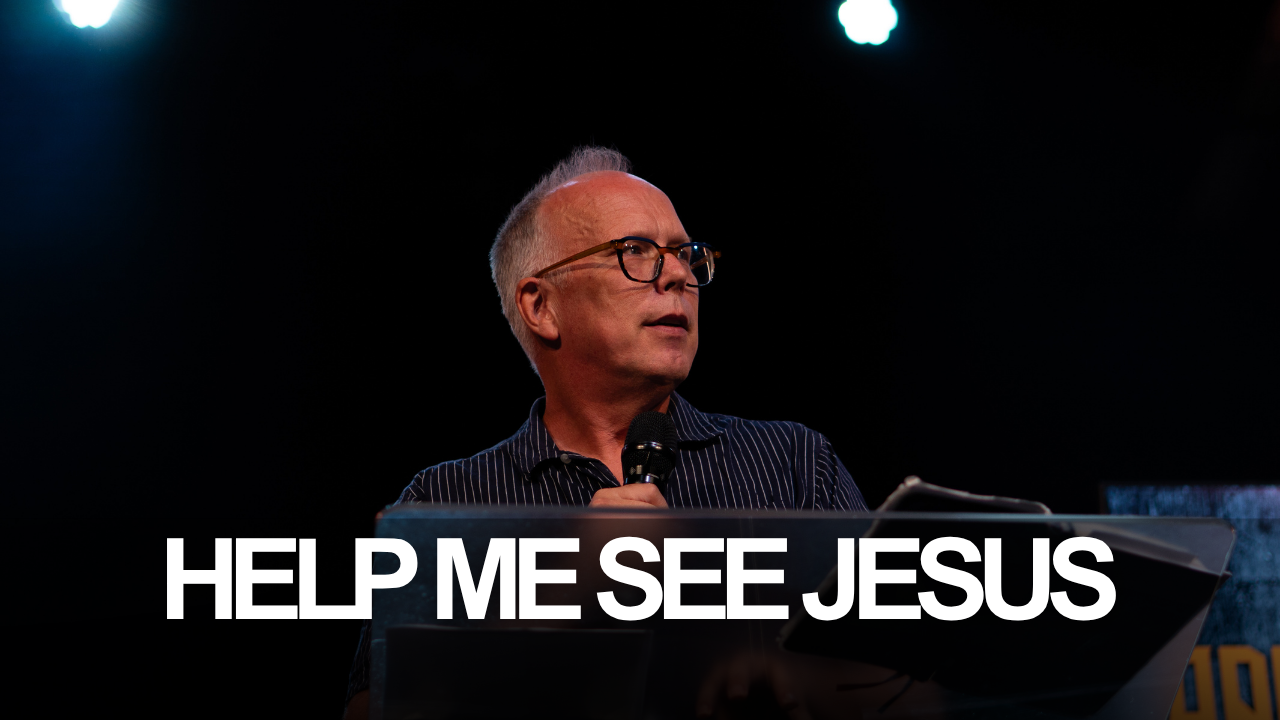
The sermon said we live in the most information-rich world in history. Why do you think information alone does not produce mature disciples?
Paul prayed for the church to receive the Spirit of wisdom and revelation. What is the difference between knowing about Jesus and truly knowing Jesus?
Pastor Craig said, “Our greatest need is revelation, not information.” How does that challenge the way we often approach faith?
Paul prayed that the eyes of our hearts would be enlightened. What do you think it means for your heart to have eyes?
The sermon said, “Whatever has your heart has your life.” What are some things that compete for your affection?
Biblical hope is confident expectation built on God’s faithfulness. Where do you need hope to come back into focus?
The message said our identity rests securely in the fact that we belong to Jesus. What voices or pressures try to define your identity apart from Him?
Paul points to resurrection power as the power available to believers. Where do you need God’s power in your present struggle?
What would change if your first prayer each morning this week was, “Help me see Jesus”?