
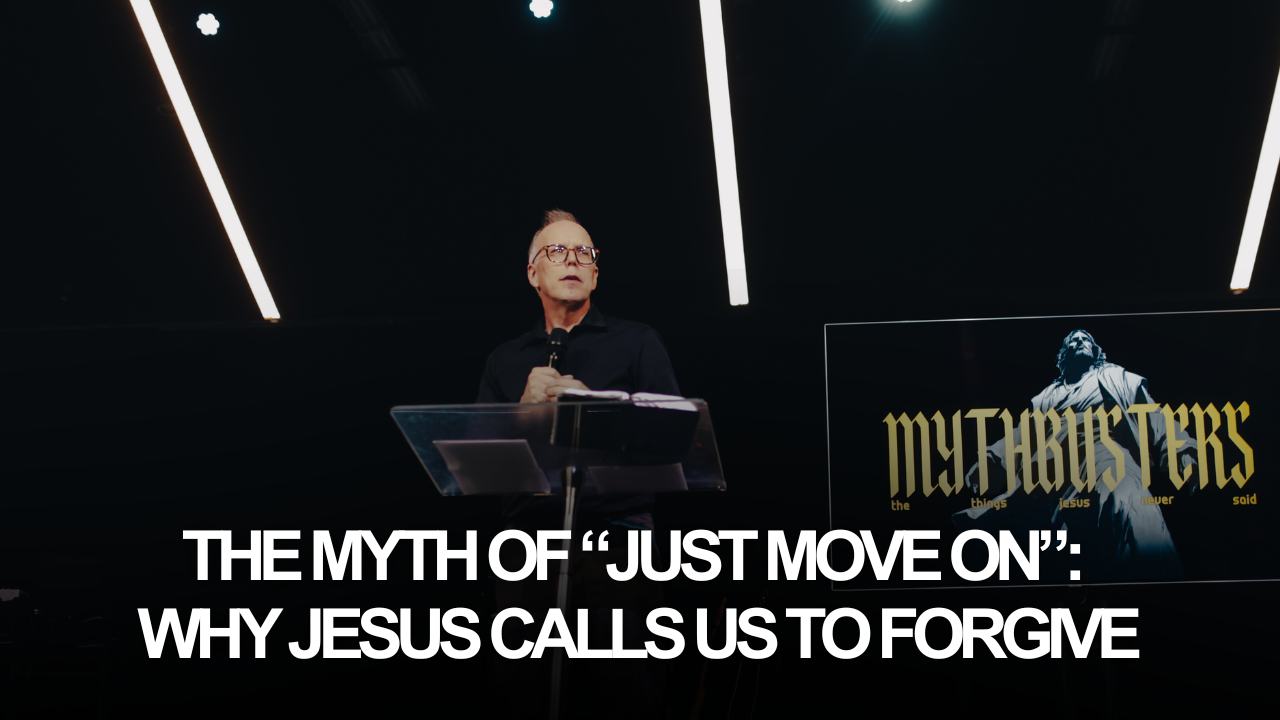
The Myth of “Just Move On”: Why Jesus Calls Us to Forgive
The Myth of “Just Move On”
Many ideas in our culture sound wise, spiritual, or even biblical—but when we look closely, they don’t actually come from Jesus.
One common message people hear today is this:
“You don’t have to forgive. Just move on.”
It sounds empowering. It sounds like self-protection. But when we compare that idea with the teaching of Jesus, we discover something very different.
Jesus consistently teaches that forgiveness is not optional for His followers—it is essential.
A World Full of Spiritual Myths
We live in a culture full of spiritual sayings that people assume are true:
“Follow your heart.”
“Karma will get them.”
“Cut toxic people out and move on.”
“If you love God, life will go smoothly.”
Many of these ideas sound wise on the surface, but they don’t come from Jesus. And when we build our lives on human wisdom rather than the truth of Christ, we often end up frustrated, disappointed, and spiritually stuck.
Jesus doesn’t call us to live by our truth or someone else’s truth.
He calls us to live by the truth.
And that truth, when practiced, leads to freedom.
Forgiveness Is Central to the Teaching of Jesus
In Matthew 6, Jesus teaches what we now call the Lord’s Prayer. In that prayer we find these words:
“Forgive us our debts, as we also have forgiven our debtors.”
But Jesus doesn’t stop there.
Right after the prayer, He circles back to emphasize forgiveness again. That’s significant. Out of everything in the prayer—God’s name, God’s kingdom, daily provision—Jesus chooses to expand specifically on forgiveness.
Why?
Because forgiveness is not a side issue for the Christian life. It is a central one.
Jesus assumes that people who have received forgiveness from God will become people who extend forgiveness to others.
The Hidden Cost of Unforgiveness
Many people try to move forward in life while still carrying resentment, bitterness, or unforgiveness.
But the truth is that unresolved bitterness rarely stays contained. Scripture warns about what it calls a “root of bitterness.” Like a root beneath the surface, it grows quietly until it begins to affect everything.
Unforgiveness doesn’t just stay in one area of life.
It affects relationships.
It affects our peace.
It affects our spiritual health.
As someone once said:
Unforgiveness doesn’t punish the offender—it poisons the soul.
When we hold on to bitterness, we are often the ones who remain trapped.
What Forgiveness Does—and Doesn’t Mean
Many people struggle with forgiveness because they misunderstand what it actually means.
Forgiveness does not mean pretending something never happened.
It does not mean trusting someone immediately again.
It does not mean allowing someone continued access to hurt you.
Forgiveness simply means releasing the debt.
It means choosing not to hold the offense over someone anymore. It means placing justice into God’s hands instead of carrying the weight ourselves.
Forgiveness is not approval of what happened. It is the decision to stop letting that hurt control your heart.
Forgiveness and Healing
When someone wounds us, the hurt can feel like an open wound.
Left untreated, wounds become infected. They grow more painful, more sensitive, and harder to heal.
Unforgiveness works the same way in our hearts.
But forgiveness begins the healing process. It removes the infection of bitterness so that the heart can slowly recover.
Healing doesn’t always happen instantly. Sometimes it takes time.
Eventually the wound becomes a scar.
The scar reminds us that something happened—but it no longer controls us.
A Forgiven Heart Becomes a Forgiving Heart
At the center of Jesus’ teaching is a simple truth:
People who have received grace become people who extend grace.
When we truly understand how much God has forgiven us, it changes how we see others.
That doesn’t make forgiveness easy.
But it reminds us that we are not forgiving because someone deserves it. We forgive because we have been forgiven.
Choosing Freedom
Forgiveness ultimately brings freedom—not only to the person we forgive, but to ourselves.
When we release the offense to God, we are refusing to stay trapped in bitterness. We are choosing healing instead of resentment.
The myth says:
“You don’t have to forgive. Just move on.”
But Jesus shows us a better way.
Real freedom doesn’t come from ignoring the hurt.
It comes from releasing it to God and allowing Him to heal our hearts.
What cultural ideas about forgiveness have you heard that don’t align with what Jesus teaches?
Why do you think Jesus placed such a strong emphasis on forgiveness in Matthew 6?
What are some common misconceptions people have about what forgiveness means?
How can unforgiveness affect other areas of our lives if we leave it unresolved?
What practical step can you take this week toward releasing a hurt or extending forgiveness?