
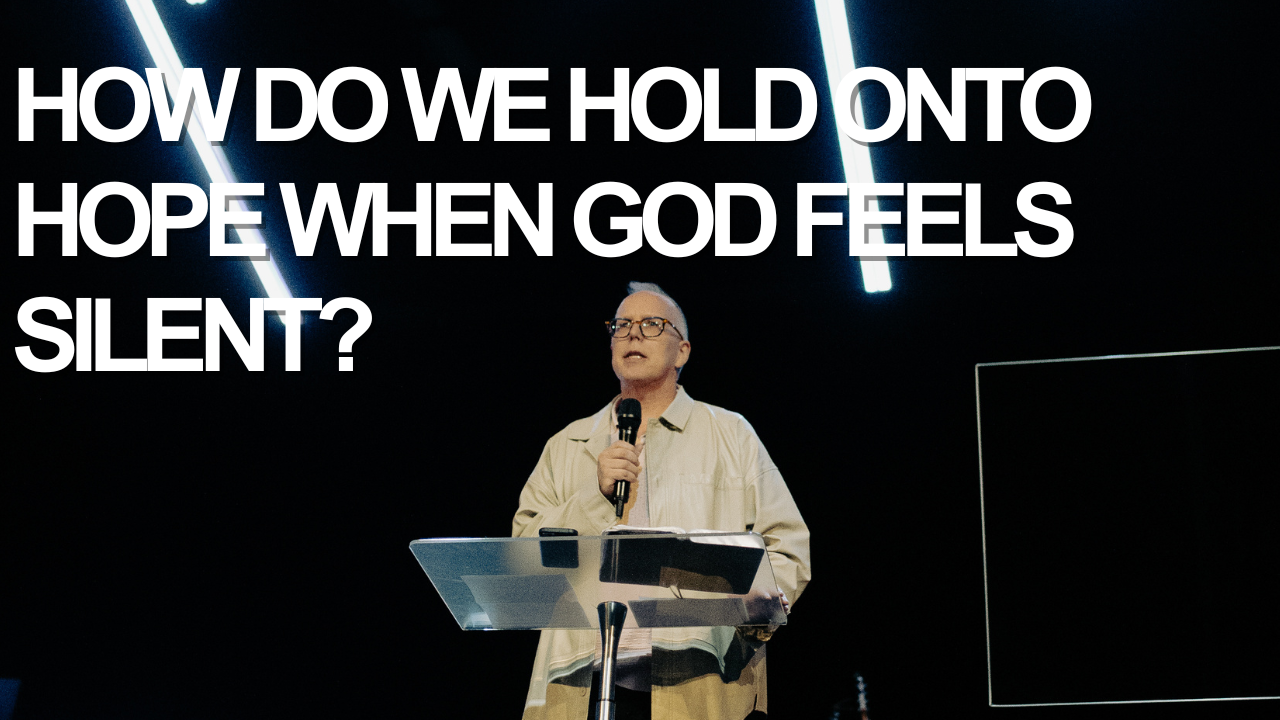
How Do We Hold Onto Hope When God Feels Silent?
Advent has always been a season of waiting — but not the gentle kind we associate with candles and calendars. Biblical waiting was raw, stretched, and deeply emotional. It was the kind of waiting where generation after generation held onto a promise that felt impossibly far away: A Redeemer is coming.
This week’s message brought that ancient tension into the present. Because if there’s something every believer eventually realizes, it’s that waiting with hope is one of the hardest parts of following Jesus.
Before Jesus came, Israel didn’t wait 30 days for Christmas — they waited centuries for God to fulfill His first promise in Genesis: a Redeemer who would crush the serpent’s head and restore humanity. They prayed, suffered, rebuilt, and clung to fragile hope through prophets, kings, exile, silence, and longing.
And in that same space between promise and fulfillment, we find ourselves too.
Hope Is Beautiful — Until You Have to Live It
Lighting a candle called hope is easy.
Living with deferred hope takes courage.
The sermon took us into Joseph’s story — a man who knew what it felt like for hope to collapse. Joseph had entered a binding covenant with Mary, their future planned and blessed. And then… he discovers she’s pregnant. Not by him. Not by any natural explanation.
In an instant, everything Joseph built his life upon fell apart.
Disappointment. Embarrassment. Betrayal. Lost dreams.
Hope deferred truly did make the heart sick.
And just like Joseph, many of us know what it feels like to stand in the rubble of plans we thought God had blessed.
But God Often Enters Quietly, Right in the Middle
Just as Joseph decides to walk away quietly, God steps in with not an explanation, but with a revelation:
Jesus — the Lord saves.
Emmanuel — God with us.
These two names anchored Joseph’s spiraling hope.
God didn’t remove the tension.
He didn’t resolve the pain instantly.
He simply reminded Joseph that what felt like chaos was actually divine timing.
And the same is true for us.
God’s Timing Isn’t Delayed — It’s Designed
Scripture says Jesus came “when the set time had fully come.”
Not earlier. Not later.
Right when heaven’s alarm clock went off.
What Joseph saw as disaster, God saw as alignment.
Nations were aligned.
Languages were unified.
Roads were built for the gospel.
Prophecies were converging.
Humanity was hungry for a Savior.
Sometimes what feels like falling apart is actually falling into place.
And when God says, “Do not fear,” it’s not because the situation is easy — it’s because He is already working in ways we cannot see.
Hope Isn’t a Feeling. Hope Is a Person.
This is the heart of Advent:
Hope is not based on circumstances shifting — hope is anchored in the One who steps into them.
Hope says:
Jesus has come.
Jesus is with us.
Jesus is coming again.
We live in the tension of the already and the not yet.
Just like Joseph.
Just like the prophets.
Just like every believer who has ever waited on God.
When Your Hope Feels Tired
If your hope feels stretched thin — that doesn’t make you weak. It makes you human. The Scriptures don’t shame the weary heart; they speak directly to it:
“May the God of hope fill you with all joy and peace as you trust in Him…”
Hope is not pretending everything is fine.
Hope is trusting that God is working even when nothing looks fine.
Joseph didn’t get clarity.
He got a call to trust.
And it was enough.
The Invitation of Advent
This week, let the waiting shape you — not in frustration, but in expectation.
Let your hope rest not in outcomes, but in Emmanuel.
Not in timelines, but in Jesus.
Not in understanding, but in His presence.
This is the hope that does not disappoint.
This is the hope Advent gives us.
And this is the hope Joseph held onto — the same hope we cling to today.
Joseph faced disappointment, delay, and uncertainty. Which part of his story resonates most with you right now, and why?
Why do you think Scripture describes hope deferred as making “the heart sick”? Where have you felt that tension in your own life?
The angel gave Joseph two names to anchor his hope: Jesus and Emmanuel. Which name speaks most into your current season?
What might it look like to trust God “in the in-between” — between the promise and the fulfillment?
Romans 15:13 talks about “overflowing with hope.” What is one step you can take this week to lean more fully on God and allow that hope to grow?