
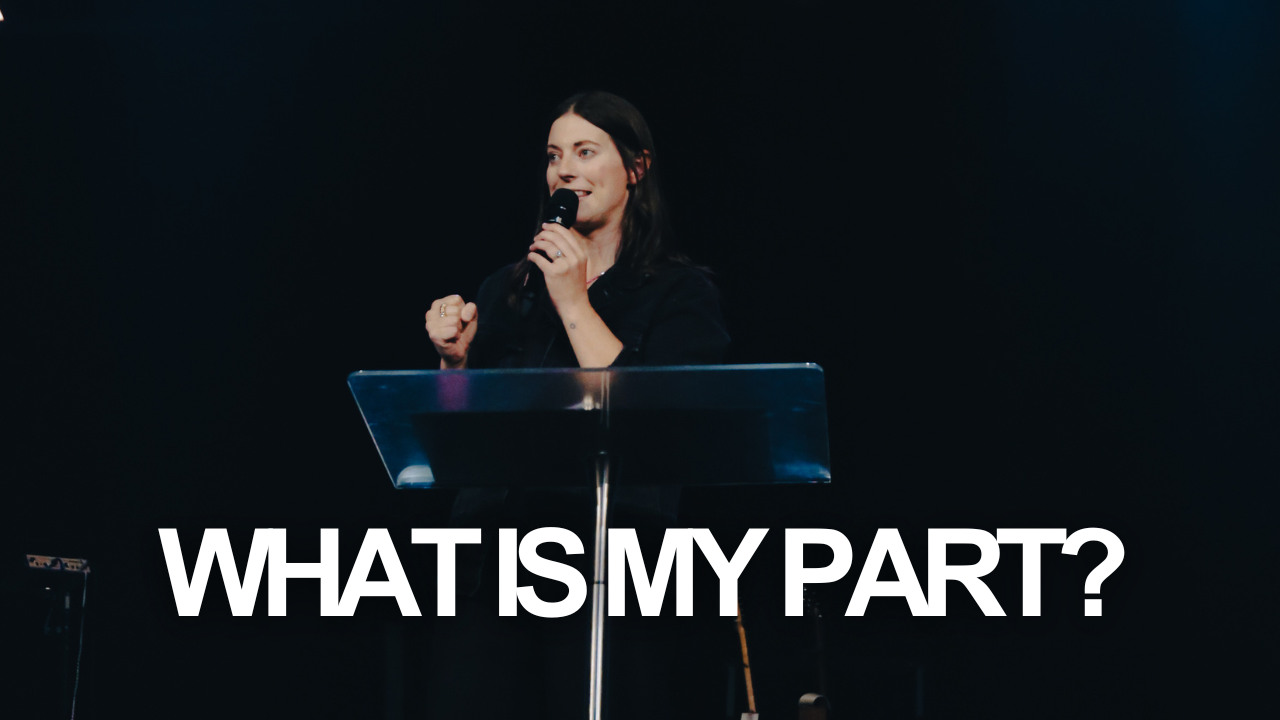
What Is My Part? Lessons From the Life of Nehemiah
Nehemiah may not be the first person we think of when we talk about giants of faith.
He did not stand before a burning bush like Moses. He was not a queen positioned to save her people like Esther. He was not lifted from slavery to second-in-command like Joseph.
Nehemiah was a cupbearer to the king.
He was an ordinary man in what seemed like a secular position. But when he heard that Jerusalem was still in ruins, something shifted in his heart.
The walls were broken.
The gates were burned.
The people were in trouble and disgrace.
For nearly 150 years, Jerusalem had been living with what should have been rebuilt.
The people had learned to live with broken walls.
But Nehemiah did not hear the news and simply move on. He mourned. He fasted. He prayed. And then he acted.
That is one of the first things we learn from Nehemiah: what burdens the heart of God should burden our hearts too.
Nehemiah could have stayed comfortable. He had access, influence, and security in the king’s court. He could have prayed from a distance and carried on with his life. But his prayer began to shift from concern for “them” to ownership for “me.”
He prayed, “Give your servant success today.”
Something was wrong. Something needed to be done. And Nehemiah was willing to ask, “Why not me?”
God had placed Nehemiah in a specific position for a specific purpose. His role as cupbearer gave him access to the king, political trust, and the ability to ask for resources that would be needed to rebuild Jerusalem.
His position was not an accident.
The same is true for us.
God not only has a plan and purpose for your life, but He has placed you where you are for a reason. Your workplace, school, family, neighbourhood, relationships, skills, conversations, and influence may all be part of how God wants to use you.
You do not have to be in a ministry position to serve God. God is not limited by your vocation. He uses all kinds of people, in all kinds of places, doing all kinds of work.
Colossians 3:17 reminds us that whatever we do, whether in word or deed, we are to do it all in the name of the Lord Jesus.
Nehemiah’s life shows us what it looks like to lead with vision and courage in the face of opposition and the impossible.
First, Nehemiah helped move people from apathy to purpose.
When he arrived in Jerusalem, the people had been living in the ruins for so long that brokenness had become normal. The project was overwhelming. The wall was massive. The need was obvious, but the people did not know where to begin.
Nehemiah gave them vision.
He said, “Come, let us rebuild the wall of Jerusalem, and we will no longer be in disgrace.”
Then he told them how the gracious hand of God had already been upon him and how the king had granted his request. The people responded, “Let us start rebuilding.”
Nehemiah brought hope into a place of discouragement.
He took something overwhelming and helped make it practical. He assigned people to sections of the wall. He brought order to chaos. He showed them that the work was possible.
Sometimes purpose begins when someone helps us see that what has been broken does not have to stay broken.
Second, Nehemiah helped move people from fear to preparedness.
As the wall began to rise, opposition came. People mocked them. Leaders plotted against them. Enemies threatened to attack.
Nehemiah did not ignore the threat, but he also did not bow to fear.
He prayed, and he posted guards.
That matters.
Nehemiah prepared spiritually and practically. He reminded the people to remember the Lord, who is great and awesome, and to fight for their families, their sons, their daughters, their wives, and their homes.
They rebuilt with tools in one hand and weapons in the other.
This was not fear. It was preparedness.
When we face opposition, we do not pretend everything is fine. We pray first, remember who God is, and take wise action.
First Corinthians 15:58 says, “Stand firm. Let nothing move you. Always give yourselves fully to the work of the Lord, because you know that your labour in the Lord is not in vain.”
If the vision has not changed and the direction of the Lord has not wavered, we stay faithful.
Third, Nehemiah helped move people from spectators to participants.
Nehemiah 3 is a long list of names. Priests, families, officials, tradesmen, workers, and people from surrounding regions all joined the rebuilding.
Nehemiah did not only gather the people who lived in the city. He rallied people who understood that if something matters to God, it should matter to His people.
The rebuilding of the wall was about more than construction. God was rebuilding a people. He was restoring identity, purpose, ownership, and spiritual responsibility.
Nehemiah helped the people see that everyone had a part to play.
That same question comes to us today:
Am I spectating or participating?
It is possible to attend church, listen to sermons, read Scripture, and still remain on the sidelines. But the kingdom of God is not something we are called to simply watch. It is something we are called to participate in.
This does not mean everyone’s part looks the same.
Some may pray.
Some may serve.
Some may mentor.
Some may give.
Some may build.
Some may encourage.
Some may lead.
Some may support quietly behind the scenes.
The amount is not the point. The heart is.
The question is: what is my part?
Nehemiah’s burden moved him to prayer. Prayer moved him to courage. Courage moved him to action. And his action helped rally a people to rebuild what had been broken for generations.
For 150 years, the walls of Jerusalem remained in ruins.
Then, through the obedience of an ordinary man and the participation of ordinary people, the wall was rebuilt in 52 days.
That is what can happen when God’s people stop spectating and start taking ownership of the work God has placed before them.
Nehemiah called ordinary people to pick up stones.
Jesus calls ordinary people to carry His gospel.
So where has God placed you?
What burden has He put on your heart?
What wall needs rebuilding?
What step of obedience is He asking you to take?
What is your part?
Pray first.
Act courageously.
Take ownership.
God uses ordinary people to accomplish extraordinary purposes when they walk with Him by faith.
Nehemiah was burdened when he heard about Jerusalem’s broken walls. What is something that currently burdens your heart?
Nehemiah prayed first before he acted. Why is it important to bring our burden to God before moving into action?
Nehemiah was not a priest or prophet, but God used his position as cupbearer. How might God want to use the position, relationships, or resources you already have?
The people had lived with broken walls for generations. Are there areas in your life where brokenness has started to feel normal?
Nehemiah moved the people from apathy to purpose by giving vision and practical next steps. What is one practical step you can take toward something God has put in front of you?
Nehemiah responded to opposition with both prayer and preparation. What does it look like to be spiritually and practically prepared in your current season?
The sermon asked whether we are spectators or participators in the kingdom of God. Where do you sense God inviting you to participate more fully?
Nehemiah’s story asks the question, “What is my part?” How would you answer that question right now?