
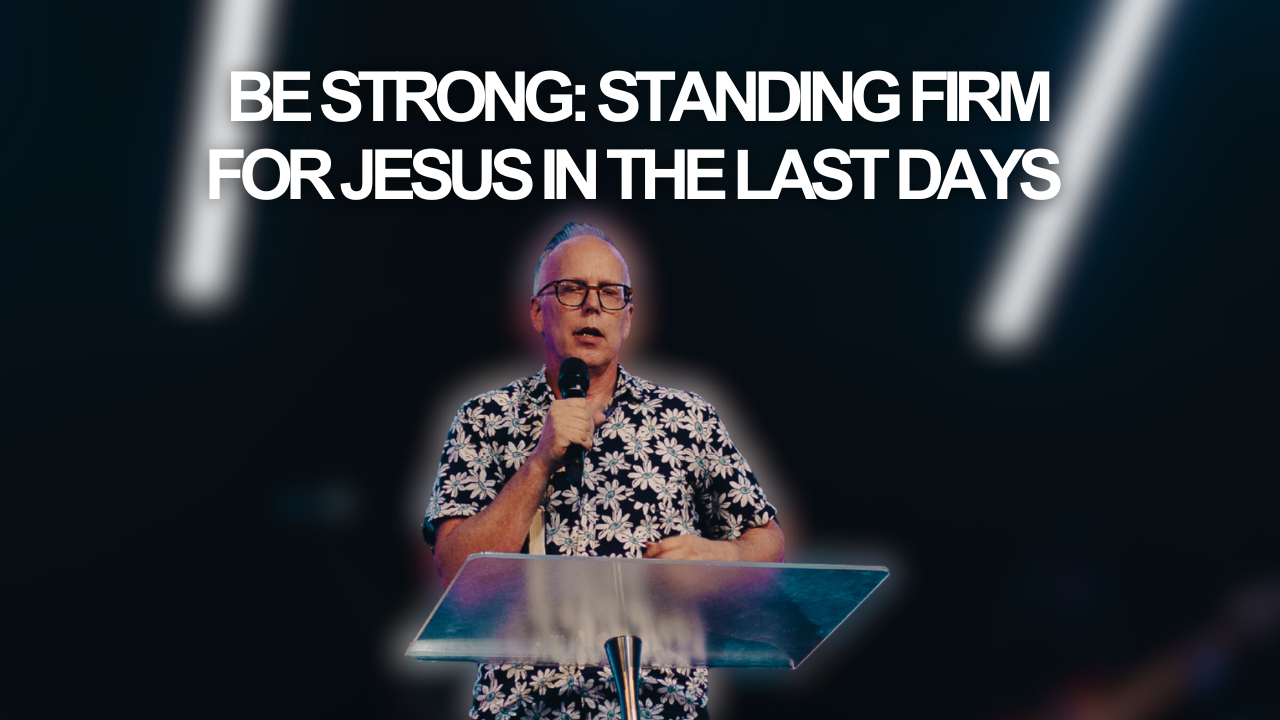
Be Strong: Standing Firm for Jesus in the Last Days
The world feels unstable.
Global tensions. Cultural shifts. Legal debates. Moral confusion.
But Scripture reminds us that the last days didn’t begin twenty years ago — they began two thousand years ago when the Spirit was poured out (Acts 2). God’s response to the last days was not retreat. It was empowerment.
And in 1 Thessalonians 2–3, Paul shows us what strength looks like when faith is challenged.
1. Be Strong Under Pressure
Paul reminds the Thessalonian believers that the gospel advanced in the face of strong opposition.
From the beginning, the church experienced resistance, slander, and political accusation. Proclaiming Jesus as King wasn’t convenient — it was costly.
And Paul makes this sobering statement:
“You are destined for trials.”
That may not be the destiny we prefer, but it is the reality Scripture prepares us for.
Following Jesus has never guaranteed comfort. It guarantees Christ.
The early church didn’t pray for easier circumstances. In Acts 4, they prayed for boldness. They asked God to strengthen them — not remove them.
Strength under pressure begins before the pressure comes. It begins with conviction settled in the clear light of day.
2. Be Strong in Conviction
Paul says, “We are not trying to please people, but God who tests our hearts”
The temptation in cultural pressure is subtle: reshape truth to secure approval.
Paul refused.
That doesn’t mean harshness. It doesn’t mean hostility. It doesn’t mean careless speech. Scripture calls us to be full of grace and truth.
But it does mean this:
We do not adjust the message to secure applause.
There is only one Master we shape our lives to please.
If cultural affirmation fades, Christ does not.
If protections narrow, allegiance does not.
Strength begins with deciding now who sits on the throne of your heart.
3. Be Strong in Standing Firm
Paul celebrates that the Thessalonians were “standing firm in the Lord”.
Standing firm is not aggression. It’s stability.
It’s not yelling louder. It’s refusing to move.
Standing firm means:
We do not abandon the Word of God.
We do not drift from Christ.
We do not surrender truth under pressure.
We do not confuse political loyalty with spiritual allegiance.
We stand in the Lord — not in personality, not in pride, not in partisanship.
Boldness is not noise.
Boldness is conviction anchored in Christ.
4. Be Strong in Love
Paul prays that their love would “increase and overflow for each other and for everyone else”.
Strength without love becomes harshness.
Conviction without love becomes cruelty.
The early church was strong because it was settled in both conviction and compassion.
In a divided world, love is not weakness — it is witness.
We love those who disagree.
We love those who mock.
We love those who misunderstand.
Because we belong to a King who loved His enemies.
One King, One Throne
The message closed with a piercing question:
Who truly has your allegiance?
Allegiance is not decided in the heat of the moment. It is decided beforehand.
If comfort conflicts with Jesus, comfort bows.
If political loyalty conflicts with Jesus, it bows.
If personal preference conflicts with Jesus, it bows.
There is only one throne in the heart of a believer.
And only one King who belongs on it.
Be ready.
Be holy.
Be strong.
Not in panic.
But in allegiance.
What stood out to you most about the idea that believers are “destined for trials”?
How can we remain firm in conviction without becoming harsh or combative?
In what ways might cultural approval tempt believers to reshape truth?
What does it practically look like to “stand firm in the Lord” in today’s climate?
Where might your allegiance be subtly divided — comfort, politics, reputation, or Christ?